
LITIGATION INTELLIGENCE
The whole river, before you move.
Judge, opposing counsel, experts, parties: their litigation history, organized into patterns and benchmarked against the baseline. The public record, organized.
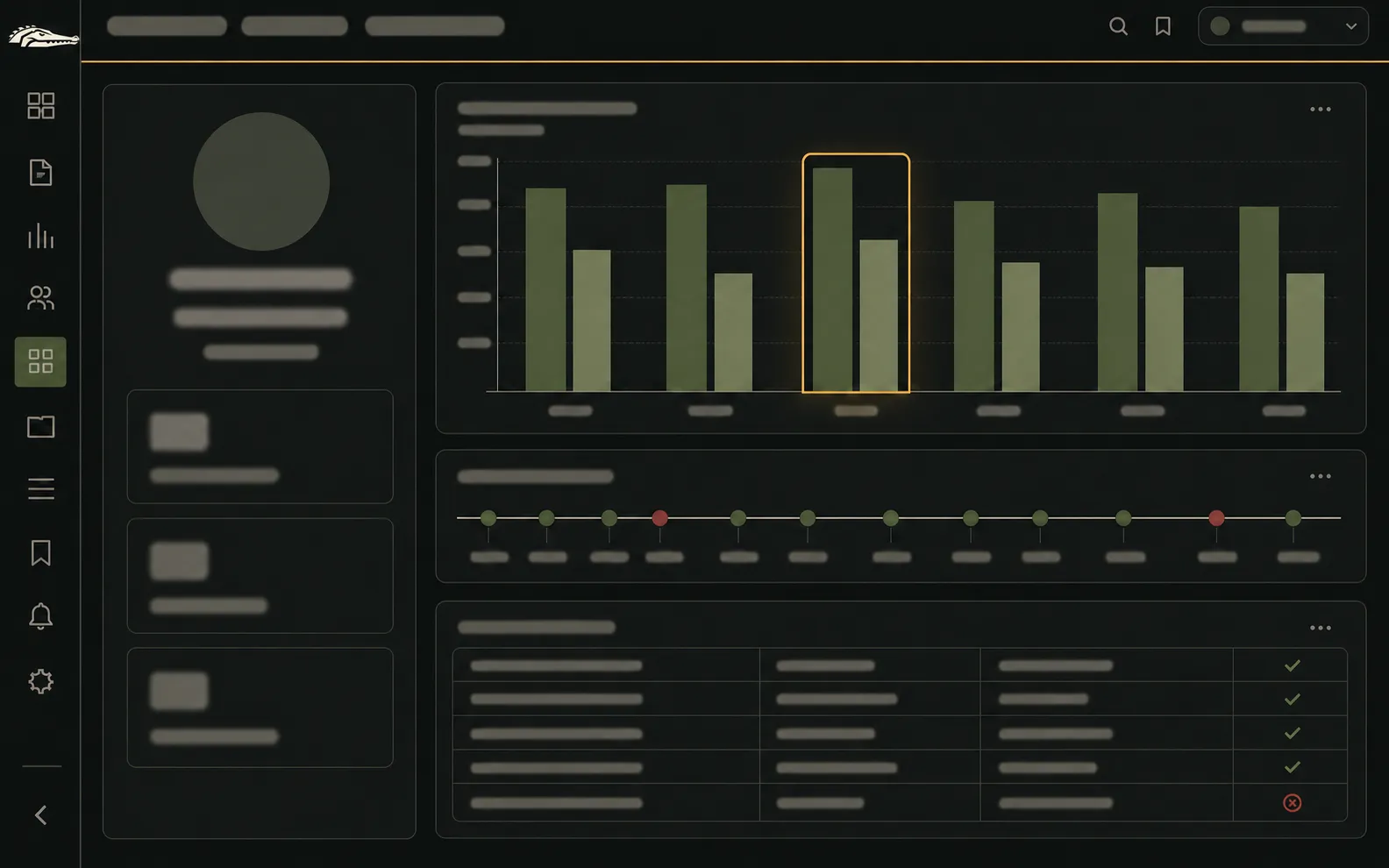
Judges, benchmarked
How this judge handles dispositive motions, continuances, and discovery disputes, always shown against the county and state average, never as a raw number pretending to be destiny.
Opposing counsel patterns
How the firm across the caption litigates: how long their cases run, how they resolve, what they file when they're behind. Behavioral patterns from the public record: dockets, filings, outcomes.
Experts and gatekeeping
Testimony history and Daubert outcomes for the experts on both sides, before you retain yours, and before you depose theirs.
All of it is the public record. Organized, benchmarked, and sourced. Nothing private, nothing scraped from behind a login. The full ethics discussion, including why some countries answer this question differently, lives on the Duty of Care page.
Intelligence shapes strategy; strategy decides which elements you fight on. The river feeds the strip like everything else.
What it doesn't do
Patterns aren't predictions. A judge who grants most of anything can still deny yours. Intelligence narrows judgment. It doesn't replace it.
Where the intelligence comes from.
Litigation Intelligence draws only from the public record: dockets, filings, orders, and outcomes in cases the judge, the opposing firm, and the testifying experts have already litigated. Nothing here comes from behind a login, a court's internal system, or anywhere a party or the public wasn't already entitled to look.
That record gets organized into patterns, how this judge rules on dispositive motions compared to the county and state average, how this firm's cases tend to resolve, what an expert's Daubert record looks like, and benchmarked, never handed to you as a raw number standing in for a prediction.
Reading what a pattern means for this case, this motion, this judge, is still the lawyer's job. A judge who grants most of a given motion type can still deny yours. Litigation Intelligence narrows the guesswork. It doesn't predict a ruling. Patterns, not predictions about people, that's the line, and it's the one the Duty of Care page holds to as well.