
DEPOSITION SUITE
A second chair that never blinks.
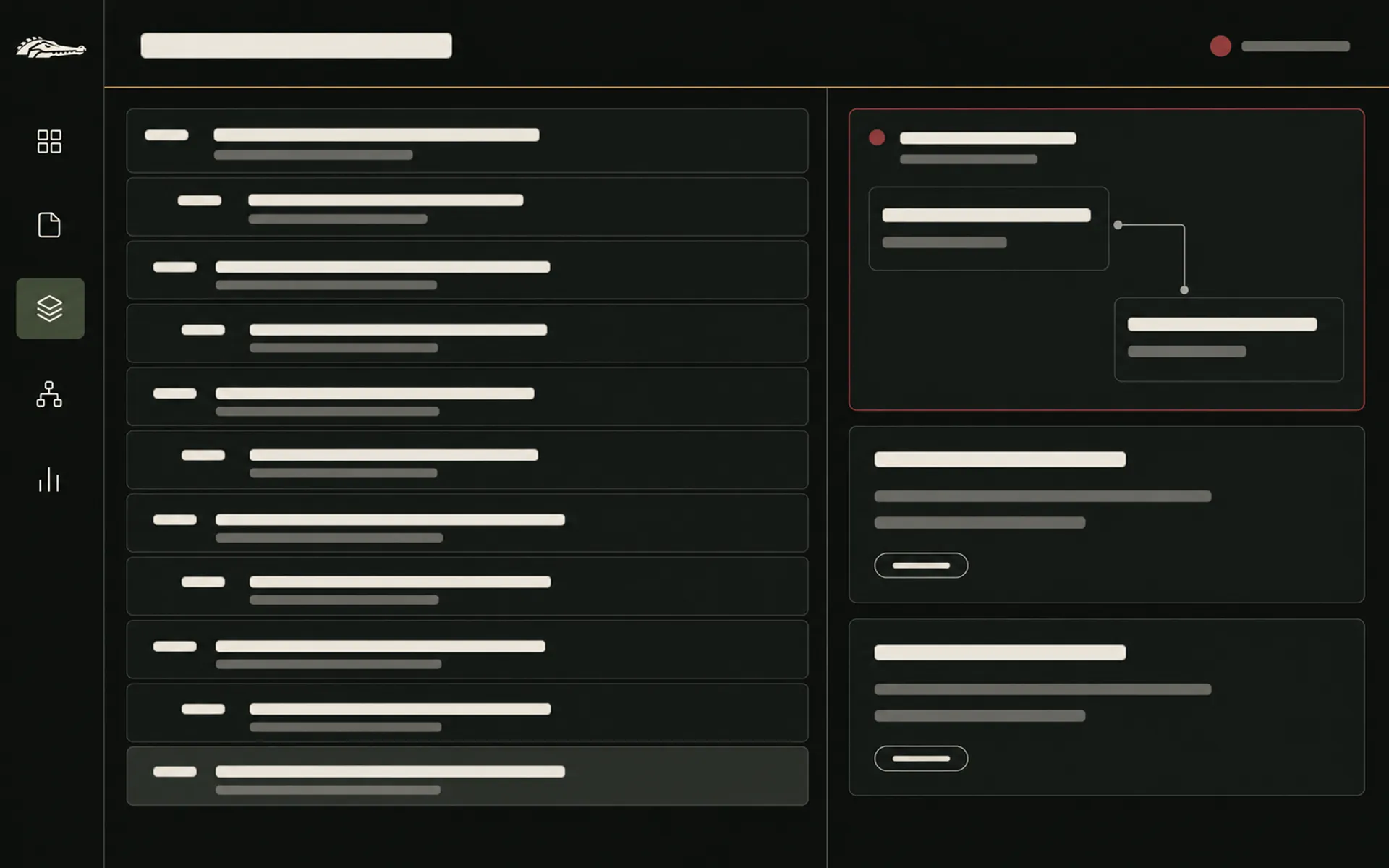
Before: a prep packet for every witness, the elements their testimony touches and every statement they've already made. During: live transcript, live contradiction flags, suggested follow-ups. After: everything syncs into the Impeachment Ledger.
Prep packets, per witness
What each witness can give you, what they can take away, and every prior statement they've made anywhere in the record, pleadings, prior depositions, interrogatory answers, correspondence, assembled before you walk in. The outline generator builds your examination from the elements you need them to carry.
The live copilot
The transcript streams. Each answer is checked against the record in real time. When a statement conflicts with a prior one, LITIGATER flags it and surfaces the source, page and line, with a suggested follow-up. Whether to take it is your call. It always was.
Post-session sync
The transcript lands in the Impeachment Ledger the day you get it. Contradictions discovered later are flagged retroactively, across every witness in the case.
Consent-first. Always.
LITIGATER's live features run only with the consent your jurisdiction requires. The workflow prompts for it on the record before anything starts. And LITIGATER works beside your court reporter, not instead of one: the official transcript is theirs, and stays theirs.
Testimony becomes placed facts. Placed facts carry elements. The deposition you took Tuesday shows up in the verdict strip Wednesday.
What it doesn't do
It flags. It suggests. It doesn't cross-examine. The follow-up that breaks the case still comes from the person asking the questions.
How the second chair sees it.
Before the deposition, LITIGATER reads everything the witness has already said, anywhere in the case: pleadings, prior depositions, interrogatory answers, correspondence. From that it builds a prep packet, what this witness can give you, what they can take away, and an outline built from the elements you need them to carry.
During the deposition, with the consent your jurisdiction requires already on the record, the transcript streams in as the witness talks. Each answer is checked against that same record in real time. A conflict surfaces with its source, page and line, and a suggested follow-up. LITIGATER doesn't decide whether to ask it. That call, like the examination itself, stays with the lawyer holding the outline.
After the deposition, the transcript is added to the Impeachment Ledger, where it keeps getting checked against every witness added later. The honest limit: LITIGATER flags and suggests. It doesn't cross-examine, and it works beside your court reporter, not instead of one. The official transcript is theirs.