
DOCKET & DEADLINES
The most indefensible malpractice risk,eaten first.
Missed deadlines are a leading cause of malpractice claims, and the hardest kind to defend. LITIGATER's docket engine is rules-based, not reminder-based: it computes every deadline from the rule that creates it, not from a calendar entry someone had to remember to make.

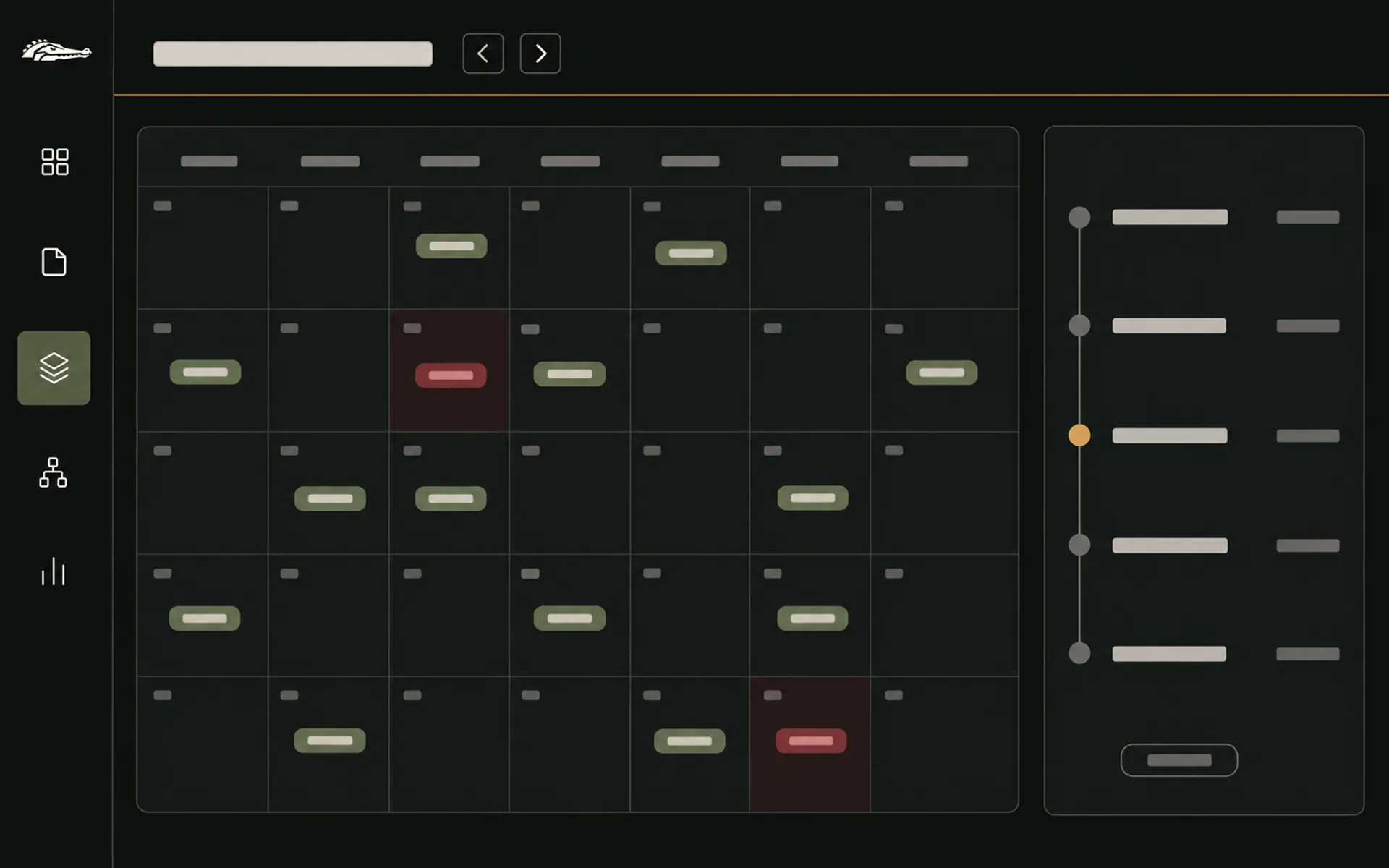
Computed from the rule
Jurisdiction rule sets compute the full chain: the triggering event, the counting method (calendar days or court days), court holidays, and service adjustments. Move the trigger date and every downstream deadline recomputes itself, the same day, without anyone touching a calendar.
Redundant by design
Every deadline alerts more than once, through more than one channel, to more than one person on the matter team, not only the paralegal who calendared it. The gap where a date lives in one departed paralegal's calendar, and nowhere else, does not exist here.
Chained to the matter
Deadlines link forward to the filings that satisfy them and back to the events that created them, so "handled" is a fact in the record, not a memory someone has to trust.
The docket engine knows what's due. The Proof Engine knows what's thin. Together they answer the only planning question that matters: what has to happen, and by when.
What it doesn't do
The engine computes; counsel confirms. Local standing orders, individual judges' practices, and eleventh-hour continuances are flagged for human review, never guessed at silently. When a rule is genuinely ambiguous, the engine shows you the ambiguity instead of picking a date and hoping.
The clock that runs below the waterline.
The docket engine starts from the event that sets a deadline running: service of the complaint, entry of a scheduling order, a hearing continued from the bench. It applies the governing jurisdiction's rule, the counting method, court holidays, and any service-method adjustment, to compute every date that follows.
What comes out is never a bare date on a calendar. Each deadline carries the rule that produced it and stays chained to the filing that will satisfy it. Move the trigger and the whole chain recomputes itself the same day. The confirming read, and the decision to rely on it, stays with counsel.
The limit: a rules engine can compute what the rule says. It cannot infer a judge's unwritten practice or a standing order that departs from the printed rule. Those get flagged for a human to check, not silently assumed.