
DISCOVERY & DRAFTING
Discovery drafted from what you're missing,not from a form file.
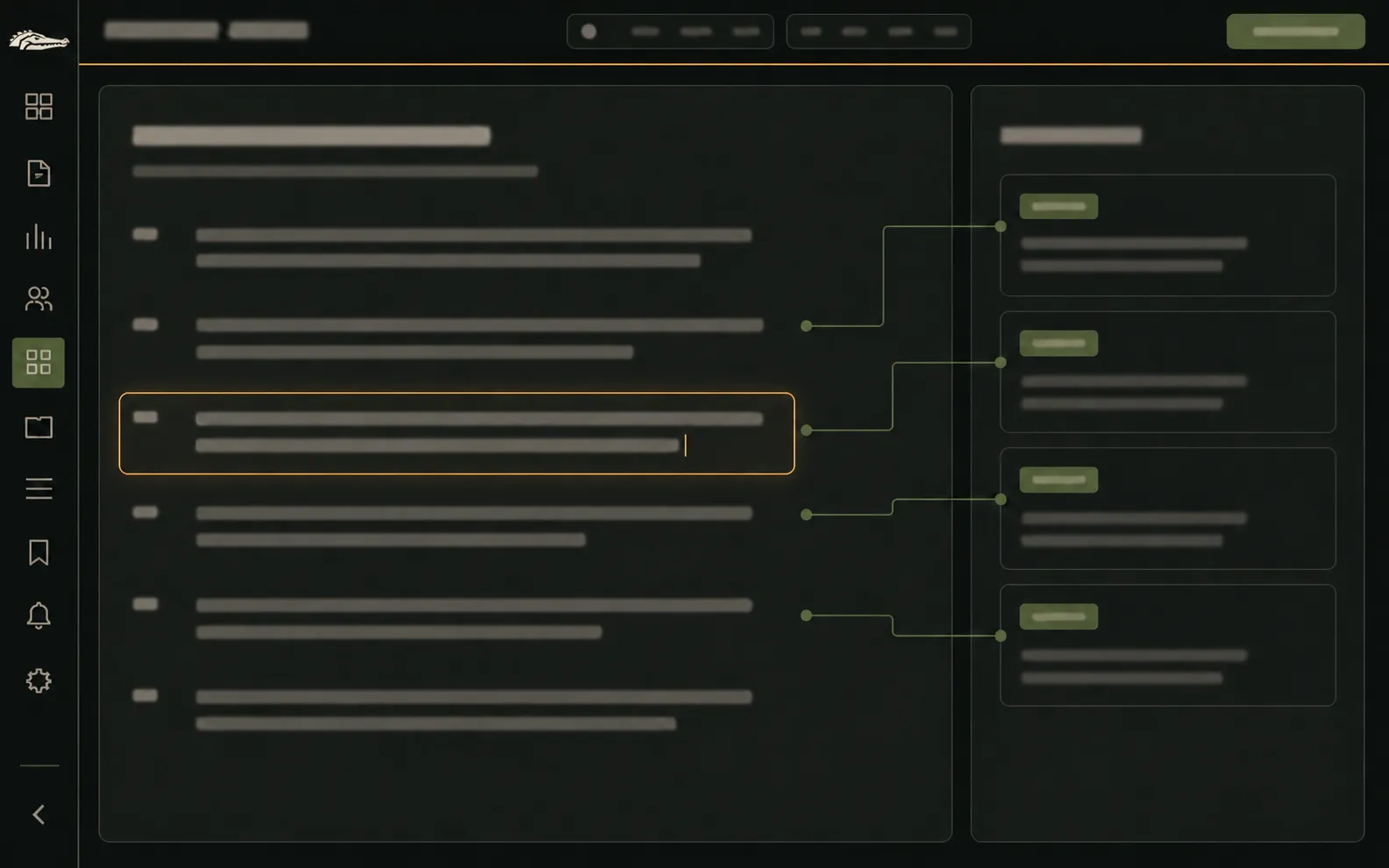
Your requests should chase your empty elements. LITIGATER reads the Proof Engine's gaps and drafts the requests for production, interrogatories, and requests for admission aimed at exactly what you can't prove yet.
Gap-targeted requests
Every draft request is annotated with the element it exists to fill, pulled straight from the Proof Engine's own map of what's carried, contested, and empty. No boilerplate padding, no thirty-request habit set copied from the last case. Nothing your case doesn't need, and nothing it does need, missing.
Pleadings and motion assembly
A causes-of-action library drives complaints and answers, built from model elements for your jurisdiction. Motions assemble from facts you've already placed in the record, so every factual assertion arrives with its citation attached, not bolted on afterward.
Privilege logs with a cited basis
Every log entry carries its claimed basis and the source document it came from. What was produced, what was withheld, and why: consistent across the whole case file, and ready to hand across the table at the meet and confer.
Responses and productions flow back into the sealed record, get placed as facts, and move elements from empty to carried. The loop closes.
What it doesn't do
It drafts. You sign. Nothing is served, filed, or sent without attorney review, by design and by your bar's rules. The drafting engine has no authority to file anything on its own; only a signed attorney does.
Chasing what is still underwater.
Discovery & Drafting reads the same element map the Proof Engine keeps for this matter: which elements are carried, which are contested, and which are still empty. It also reads the causes of action pleaded and the facts already placed and cited in the sealed record.
From that map it drafts requests for production, interrogatories, and requests for admission aimed at the empty and contested elements, each one annotated with the element it exists to fill. It assembles pleadings and motions from facts already placed and cited, so every assertion arrives with its support attached. Every draft is exactly that, a draft: nothing is served, filed, or sent until an attorney reviews and signs it.
The limit: the module drafts to the gaps it can see in your own record. It cannot draft a request for a fact pattern nobody told it about, and it does not choose strategy, phasing, or which fights are worth having. That judgment stays with counsel, every time.